
Stephen Charnock
The Existence & Attributes of God
Vol. 1, pp. 321-328.
“God is a Spirit: and they that worship him
must worship him in spirit and in truth.“
(John 4:24)
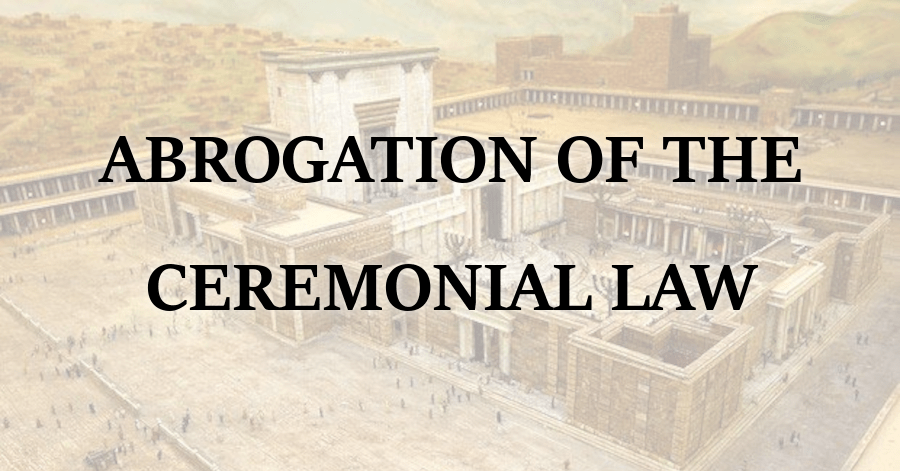
The ceremonial law was abolished to promote the spirituality of divine worship. That service was gross, carnal, calculated for an infant and sensitive church. It consisted in rudiments, the circumcision of the flesh, the blood and smoke of sacrifices, the streams of incense, observation of days, distinction of meats, corporal purifications; every leaf of the law is clogged with some rite to be particularly observed by them. The spirituality of worship lay veiled under a thick cloud, that the people could not behold the glory of the gospel, which lay covered under those shadows: ‘They could not stedfastly look to the end of that which was abolished’ (2 Cor. 3:13). They understood not the glory and spiritual intent of the law, and therefore came short of that spiritual frame in the worship of God, which was their duty; and therefore, in opposition to this administration, the worship of God under the gospel is called by our Saviour in the text, a worship in spirit; more spiritual for the matter, more spiritual for the motives, and more spiritual for the manner and frames of worship.
Ceremonial Law vs the Gospel.
(1.) This legal service is called flesh in Scripture, in opposition to the gospel, which is called spirit. The ordinances of the law, though of divine institution, are dignified by the apostle with no better a title than carnal ordinances (Heb. 9:10), and a carnal command (Heb. 7:16); but the gospel is called the ministration of the spirit, as being attended with a special and spiritual efficacy on the minds of men (2 Cor. 3:8). And when the degenerate Galatians, after having tasted of the pure streams of the gospel, turned about to drink of the thicker streams of the law, the apostle tells them that they ‘begun in the spirit,’ and would not be ‘made perfect in the flesh,’ Gal. 3:3; they would leave the righteousness of faith for a justification by works. The moral law, which is in its own nature spiritual (Rom. 7:14), in regard of the abuse of it in expectation of justification by the outward works of it, is called flesh. Much more may the ceremonial administration, which was never intended to run parallel with the moral, nor had any foundation in nature, as the other had
That whole economy consisted in sensible and material things which only touched the flesh; it is called ‘the letter,’ and the ‘oldness of the letter’ (Rom. 7:6); as letters, which are but empty sounds in themselves, but put together and formed into words, signify something to the mind of the hearer or reader. An old letter, a thing of no efficacy upon the spirit, but as a law written upon paper. The gospel hath an efficacious spirit attending it, strongly working upon the mind and will, and moulding the soul into a spiritual frame for God; according to the doctrine of the gospel, the one is old and decays, the other is new, and increaseth daily
And as the law itself is called flesh, so the observers of it and resters in it are called ‘Israel after the flesh,’ 1 Cor. 10:18; and the evangelical worshipper is called a ‘a Jew after the spirit,’ Rom. 2:29. They were Israel after the flesh as born of Jacob, not Israel after the spirit as born of God; and therefore the apostle calls them Israel and not Israel (Rom. 9:6); Israel after a carnal birth, not Israel after a spiritual; Israel in the circumcision of the flesh, not Israel by a regeneration of the heart
The Ceremonial Law was not a fit means to bring the heart into a spiritual frame.
(2.) The legal ceremonies were not a fit means to bring the heart into a spiritual frame. They had a spiritual intent; the rock and manna prefigured the salvation and spiritual nourishment by the Redeemer (1 Cor. 10:3-4). The sacrifices were to point them to the justice of God in the punishment of sin, and the mercy of God in substituting them in their steads, as types of the Redeemer and the ransom by his blood. The circumcision of the flesh was to instruct them in the circumcision of the heart. They were flesh in regard of their matter, weakness, and cloudiness; spiritual in regard of their intent and signification; they did instruct, but not efficaciously work strong spiritual affections in the soul of the worshipper. They were ‘weak and beggarly elements’ (Gal. 4:9), had neither wealth to enrich nor strength to nourish the soul. They could not perfect the comers to them, or put them into a frame agreeable to the nature of God (Heb. 10:1, 9:9), nor ‘purge the conscience from those dead’ and dull dispositions which were by nature in them, ver. 14; being carnal, they could not have an efficacy to purify the conscience of the offerer, and work spiritual effects. Had they continued without the exhibition of Christ, they could never have wrought any change in us, or purchased any favour for us. At the best they were but shadows, and came inexpressibly short of the efficacy of that person and state whose shadows they were. The shadow of a man is too weak to perform what the man himself can do, because it wants the life, spirit, and activity of the substance. The whole pomp and scene was suited more to the sensitive than the intellectual nature, and, like pictures, pleased the fancy of children, rather than improved their reason. The Jewish state was a state of childhood (Gal. 5:2), and that administration a pedagogy (Gal. 4:24).
The law was a schoolmaster, fitted for their weak and childish capacity, and could no more spiritualise the heart than the teachings in a primer school can enable the mind, and make it fit for affairs of state; and, because they could not better the spirit, they were instituted only for a time, as elements delivered to an infant age, which naturally lives a life of sense rather than a life of reason. It was also a servile state, which doth rather debase than elevate the mind, rather carnalise than spiritualise the heart; besides, it is a sense of mercy that both melts and elevates the heart into a spiritual frame: ‘There is forgiveness with thee that thou mayest be feared’ (Ps. 130:4). And they had in that state but some glimmerings of mercy in the daily bloody intimations of justice. There was no sacrifice for some sins, but a cutting off without the least hints of pardon; and in the yearly remembrance of sin there was as much to shiver them with fear as to possess them with hopes, and such a state which always held them under the conscience of sin could not produce a free spirit, which was necessary for a worship of God according to his nature.
The use of the Ceremonial Law hindered spiritual worship.
(3.) In their use they rather hindered than furthered a spiritual worship. In their own nature they did not tend to the obstructing a spiritual worship, for then they had been contrary to the nature of religion and the end of God who appointed them. Nor did God cover the evangelical doctrine under the clouds of the legal administration, to hinder the people of Israel from perceiving it, but because they were not yet capable to bear the splendour of it had it been clearly set before them. The shining of the face of Moses was too dazzling for their weak eyes, and therefore there was a necessity of a veil, not for the things themselves, but the weakness of their eyes (2 Cor. 3:13-14). The carnal affections of that people sunk down into the things themselves, stuck in the outward pomp, and pierced not through the veil to the spiritual intent of them; and by the use of them, without rational conceptions, they besotted their minds, and became senseless of those spiritual motions required of them. Hence came all their expectations of a carnal Messiah; the veil of ceremonies was so thick, and the film upon their eyes so condensed, that they could not look through the veil to the Spirit of Christ. They beheld not the heavenly Canaan for the beauty of the earthly, nor minded the regeneration of the spirit while they rested upon the purifications of the flesh. The prevalency of sense and sensitive affections diverted their minds from inquiring into the intent of them. Sense and matter are often clogs to the mind, and sensible objects are the same often to spiritual motions.
Our souls are never more raised than when they are abstracted from the entanglements of them. A pompous worship, made up of many sensible objects, weakens the spirituality of religion. Those that are most zealous for outward are usually most cold and indifferent in inward observances, and those that overdo in carnal modes usually underdo in spiritual affections. This was the Jewish state. The nature of the ceremonies being pompous and earthly, by their show and beauty meeting with their weakness and childish affections, filled their eyes with an outward lustre, allured their minds, and detained them from seeking things higher and more spiritual. The kernel of those rites lay concealed in a thick shell, the spiritual glory was little seen, and the spiritual sweetness little tasted. Unless the Scripture be diligently searched, it seems to transfer the worship of God from true faith and the spiritual motions of the heart, and stake it down to outward observances and the opus operatum [“the work wrought”]; besides, the voice of the law did only declare sacrifices, and invited the worshipper to them with a promise of the atonement of sin, turning away the wrath of God. It never plainly acquainted them that those things were types and shadows of something future, that they were only outward purifications of the flesh. It never plainly told them at the time of appointing them that those sacrifices could not abolish sin, and reconcile them to God. Indeed, we see more of them since their death and dissection in that one Epistle to the Hebrews than can be discerned in the five books of Moses.
Besides, man naturally affects a carnal life, and therefore affects a carnal worship; he designs the gratifying his sense, and would have a religion of the same nature. Most men have no mind to busy their reason above the things of sense, and are naturally unwilling to raise them up to those things which are allied to the spiritual nature of God; and therefore the more spiritual any ordinance is, the more averse is the heart of man to it. There is a ‘simplicity of the gospel,’ from which our minds are easily corrupted by things that pleasure the sense, as Eve was by the curiosity of her eye and the liquorishness of her palate (2 Cor. 11:3). From this principle hath sprung all the idolatry in the world. The Jews knew they had a God who had delivered them, but they would have a sensible God to go before them (Exod. 32:1); and the papacy at this day is a witness of the truth of this natural corruption.
God was displeased with Israel’s ceremonial worship.
(4.) Upon these accounts, therefore, God never testified himself well pleased with that kind of worship. He was not displeased with them, as they were his own institution, and ordained for the representing (though in an obscure manner) the glorious things of the gospel; nor was he offended with those people’s observance of them, for since he had commanded them, it was their duty to perform them, and their sin to neglect them; but he was displeased with them as they were practised by them, with souls as morally carnal in the practices, as the ceremonies were materially carnal in their substance. It was not their disobedience to observe them; but it was a disobedience, and a contempt of the end of the institution, to rest upon them, to be warm in them and cold in morals. They fed upon the bone, and neglected the marrow; pleased themselves with the shell, and sought not for the kernel. They joined not with them the internal worship of God, fear of him, with faith in the promised seed, which lay veiled under those coverings: Hos. 6:6, ‘I desired mercy and not sacrifice, and the knowledge of God more than burnt-offerings.’ And therefore he seems sometimes weary of his own institutions, and calls them not his own, but their sacrifices, their feasts (Isa. 1:11, 14). They were his by appointment, theirs by abuse. The institution was from his goodness and condescension, therefore his; the corruption of them was from the vice of their nature, therefore theirs. He often blamed them for their carnality in them, shewed his dislike of placing all their religion in them, gives the sacrificers, upon that account, no better a title than that of the ‘princes of Sodom and Gomorrah’ (Isa. 1:10); and compares the sacrifices themselves to the ‘cutting off a dog’s neck,’ ‘swine’s blood,’ and the ‘murder of a man’ (Isa. 66:3).
And indeed God never valued them, or expressed any delight in them. He despised the feasts of the wicked (Amos 5:21) and had no esteem for the material offerings of the godly: ‘Will I eat the flesh of bulls, or drink the blood of goats?’ (Ps. 50:13) which he speaks to his saints and people, before he comes to reprove the wicked, which he begins, ver. 16, ‘But to the wicked, God said,’ etc. So slightly he esteemed them, that he seems to disown them to be any part of his command, when he brought his people out of the land of Egypt: ‘I spake not to your fathers, nor commanded them concerning burnt-offerings and sacrifices’ (Jer. 7:22). He did not value nor regard them, in comparison of that inward frame which he had required by the moral law; that being given before the law of ceremonies, obliged them, in the first place, to an observance of those precepts. They seemed to be below the nature of God, and could not of themselves please him. None could in reason persuade themselves that the death of a beast was a proportionable offering for the sin of a man, or ever was intended for the expiation of transgression.
In the same rank are all our bodily services under the gospel. A loud voice without spirit, bended bulrushes without inward affections, are no more delightful to God than the sacrifices of animals. It is but a change of one brute for another of a higher species; a mere brute, for that part of man which hath an agreement with brutes. Such a service is a mere animal service, and not spiritual.
God never intended the Ceremonial Law to endure.
(5.) And therefore God never intended that sort of worship to be durable, and had often mentioned the change of it for one more spiritual. It was not good or evil in itself; whatsoever goodness it had was solely derived to it by institution, and therefore it was mutable. It had no conformity with the spiritual nature of God, who was to be worshipped, nor with the rational nature of man, who was to worship. And therefore he often speaks of taking away the new moons, and feasts, and sacrifices, and all the ceremonial worship, as things he took no pleasure in, to have a worship more suited to his excellent nature. But he never speaks of removing the gospel administration, and the worship prescribed there, as being more agreeable to the nature and perfections of God, and displaying them more illustriously to the world.
The apostle tells us it was to be disannulled because of its weakness (Heb. 7:18). A determinate time was fixed for its duration, till the accomplishment of the truth figured under that pedagogy (Gal. 4:2). Some of the modes of that worship being only typical, must naturally expire and be insignificant in their use, upon the finishing of that by the Redeemer, which they did prefigure; and other parts of it, though God suffered them so long because of the weakness of the worshipper, yet because it became not God to be always worshipped in that manner, he would reject them, and introduce another more spiritual and elevated. ‘Incense and a pure offering’ should be offered everywhere unto his name (Mal. 1:11).
He often told them he would make a new covenant by the Messiah, and the old should be rejected; that the ‘former things should not be remembered, and the things of old no more considered,’ when he should do ‘a new thing in the earth’ (Isa. 43:18-19). Even the ark of the covenant, the symbol of his presence and the glory of the Lord in that nation, should not any more be remembered and visited (Jer. 3:16); that the temple and sacrifices should be rejected, and others established; that the order of the Aaronical priesthood should be abolished, and that of Melchisedec set up in the stead of it in the person of the Messiah, to endure for ever (Ps. 110); that Jerusalem should be changed, a new heaven and earth created, a worship more conformable to heaven, more advantageous to earth. God had proceeded in the removal of some part of it, before the time of taking down the whole furniture of this house. The pot of manna was lost, Urim and Thummim ceased, the glory of the temple was diminished, and the ignorant people wept at the sight of the one, without raising their faith and hope in the consideration of the other, which was promised to be filled with a spiritual glory.
A.D. 70
And as soon as ever the gospel was spread in the world, God thundered out his judgments upon that place in which he had fixed all those legal observances; so that the Jews, in the letter and flesh, could never practice the main part of their worship, since they were expelled from that place where it was only to be celebrated. It is 1,600 years since they have been deprived of their altar, which was the foundation of all the Levitical worship, and have wandered in the world ‘without a sacrifice, a prince or priest, an ephod or teraphim’ (Hos. 3:4).
And God fully put an end to it in the command he gave to the apostles, and in them to us, in the presence of Moses and Elias, to hear his Son only: ‘Behold a voice out of the cloud, which said, This is my beloved Son, in whom I am well pleased: hear him’ (Mat. 17:5); and at the death of our Saviour, testified it to that whole nation and the world, by the rending in twain the vail of the temple. The whole frame of that service, which was carnal, and by reason of the corruption of man, weakened, is nulled, and a spiritual worship is made known to the world, that we might now serve God in a more spiritual manner, and with more spiritual frames.
 Purely Presbyterian